Contactless and NFC Payments: Redefining Everyday Transactions
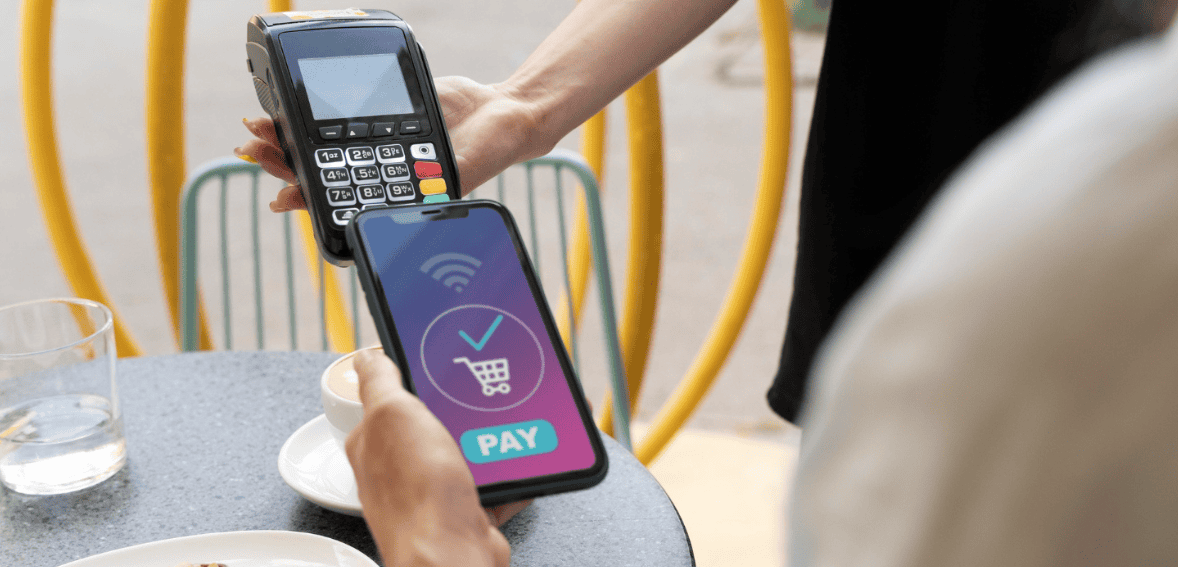
Think about the last time you paid for something with cash. For a growing number of people, the honest answer is that they cannot easily remember. The physical act of handing over paper currency, receiving change, and tucking coins into a pocket has been gradually replaced by a sequence of gestures so quick and frictionless that they barely register as transactions at all. A tap of a phone against a terminal. A wave of a card. A glance at a screen followed by a beep that signals everything went through.
Contactless payments have moved from a novelty feature to an infrastructure expectation in a remarkably short period, and the shift has been felt across every type of retail environment from coffee shops and transit systems to hospitals and parking garages.
The technological innovation behind this phenomenon is NFC Payments, a short-range wireless communications technology that allows devices to share data securely once they are within a few centimeters from one another. In order to comprehend how the technology operates, why it has been adopted so quickly, and the implications it may have on business and the consumer moving forward, it has become more necessary than ever before to understand the technology. Contactless payments do not just represent a technological innovation; rather, they represent a cultural change in how we perceive commerce and conduct ourselves in our everyday economic lives.
The Technology Behind the Tap
NFC payment technology is built on a radio frequency communication standard that allows two NFC-enabled devices to exchange small amounts of data when they are brought into close proximity, typically within four centimeters of each other. The technology has its roots in radio-frequency identification, which has been used for decades in supply chain management, access control systems, and transit fare collection. What made NFC applicable to consumer payments was the miniaturization of the necessary components to the point where they could be embedded in credit cards, smartphones, and wearable devices at negligible cost, combined with the development of security protocols that made the technology trustworthy for financial transactions.
During the use of the card/device, the NFC chip embedded into the contactless card or device transfers its information to the NFC reader, sending a unique authentication token and not the actual card number. The unique token for each transaction is used only once and can never be used again, which is one of the key security features of NFC payments compared to traditional magstripe payments when the same data of the card is always being sent.
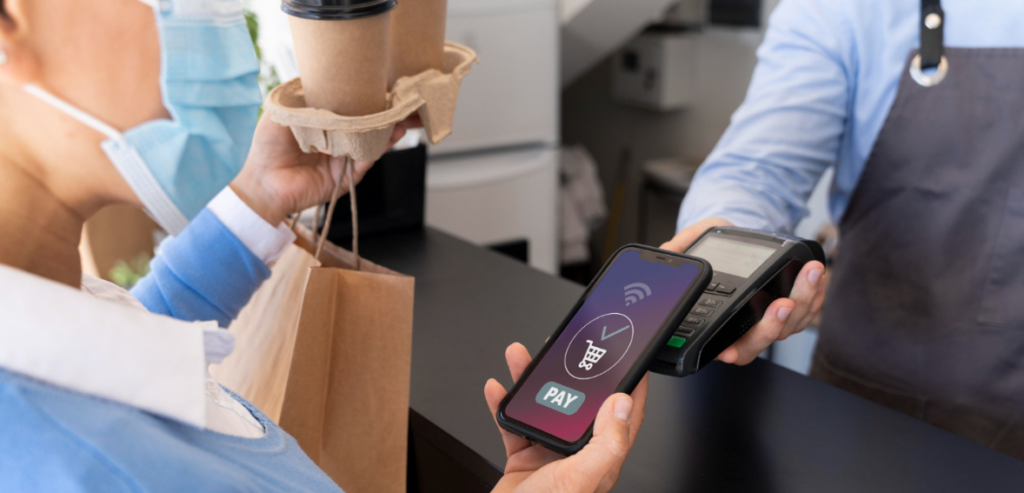
The entire transaction takes less than a second, which makes NFC payment technology much faster than any other payment method and is why NFC payment was implemented in environments where speed of operations is important, such as transit fare collection and quick-service restaurants. The lack of a long interaction process, along with no need to enter a PIN code, allows customers to make payments faster and is part of what they enjoy about NFC technology.
From Cards to Phones to Watches: The Device Evolution
The evolution of tap-to-pay solutions has followed the broader trajectory of personal technology, expanding from contactless credit and debit cards to smartphones and then to wearable devices in a progression that has made contactless payment capability available through an ever-growing range of devices that people already carry.
Contactless cards were the first widely deployed form of NFC payment technology, and they remain the most common contactless payment method globally because they require no additional setup and work in the same familiar way as traditional chip cards with the added benefit of not requiring insertion or PIN entry for eligible transactions. The integration of NFC payment capability into smartphones through platforms like Apple Pay, Google Pay, and Samsung Pay represented a more significant transformation because it placed payment capability inside a device that most people carry continuously and check dozens of times per day.
Smartphone-based digital wallets do not just mimic the contactless experience offered by debit or credit cards. In addition, smartphone-based digital wallets give users the ability to hold more than one card in one application and to add or remove cards whenever they wish, usually without having to wait around for a new physical card. The expansion of contactless payments to include smartwatches and fitness trackers means that people have been able to make payments using an even simpler method of retrieving a card: a smartwatch.
This enables a jogger to leave their wallet and phone at home but still be able to stop at a cafe and make a quick purchase simply by tapping their wrist. Not only does this represent consumer choice, but it also drives businesses to invest in new terminals, since a retailer needs equipment capable of accepting payments from all sorts of devices.
Why Adoption Accelerated So Dramatically
Contactless payments had been available in various markets for years before their adoption reached the inflection point that made them the dominant payment method in many categories. The technology existed. The infrastructure was being gradually rolled out. Yet the behavioral shift to widespread adoption happened faster in some markets and more slowly in others, and understanding why illuminates how technology adoption works more broadly. In markets like the United Kingdom and Australia, aggressive infrastructure investment by banks and card networks, combined with high contactless transaction limits and widespread merchant terminal upgrades, produced high adoption rates earlier than in markets where one or more of these factors was absent.
In the United States, the transition was slower in the early years partly because of the country’s particular card payment infrastructure history and partly because consumer habits around card insertion and signature were deeply ingrained. The period beginning in 2020 accelerated contactless adoption in every market more dramatically than any deliberate industry initiative had managed, as consumers actively sought payment methods that minimized physical contact and merchants updated their infrastructure accordingly.
The behavioral change that resulted proved permanent in most cases, because consumers who had adopted contactless payments for hygiene reasons discovered the speed and convenience benefits independently and continued using them after the original motivation was no longer pressing. This pattern of accelerated adoption producing lasting behavioral change is one of the defining characteristics of the contactless payments story, and it explains why the technology has maintained its growth trajectory well beyond the period that initially drove its acceleration.
The Merchant Perspective: Infrastructure and Economics
For businesses accepting payments, the transition to contactless infrastructure involves both one-time investment decisions and ongoing operational implications that affect costs, transaction speed, and customer experience. Modern retail payments infrastructure capable of accepting NFC transactions requires POS terminals with built-in NFC readers, which have become standard in most new terminal hardware but which represent an upgrade requirement for businesses still operating older equipment. The economics of this upgrade are generally favorable because the operational benefits of faster transactions, reduced cash handling, and improved customer experience typically justify the hardware investment relatively quickly, particularly for businesses with high transaction volumes where the cumulative time savings and throughput improvements are meaningful.
Contactless payment interchange economics tend to be similar to those of chip cards in general, as the card network calculates the interchange fee according to parameters such as the type of the card and the type of the transaction but does not take contactless vs. non-contactless into account directly. In merchants who have previously been dealing with numerous magnetic stripe transactions, switching to the processing of both contactless and chip cards will help avoid chargeback and fraud issues as the dynamic authentication of NFC and EMV chip transactions offers much better protection from counterfeit card fraud than magnetic stripe transactions.
The enhanced security is translated into reduced risks of chargeback and fraudulent activities, thus resulting in lower costs of processing transactions. Many businesses can offset the investment needed to upgrade their terminals with the savings due to increased security and reduced fraud. Merchants who have implemented tap-to-pay options as their sole payment channel and not just one of the options have discovered that having a single method of making purchases and handling transactions makes it easier for their employees to learn how to use this technology and minimizes errors during transactions.
Security Architecture and Consumer Protection
One of the most important and most consistently misunderstood aspects of NFC payment technology is its security profile, which is stronger than many consumers assume and stronger in key respects than the payment methods it is replacing. The concern most commonly expressed about contactless payments is the fear that a malicious actor with an NFC reader could scan a payment card without the owner’s knowledge in a crowded environment. This concern, while not entirely without theoretical basis, overstates the practical risk for several reasons.
The effective communication range of NFC is measured in centimeters rather than meters, making an undetected scan in a real-world environment extremely difficult to execute. Each contactless transaction generates a unique dynamic authentication token that is specific to that transaction and cannot be reused, which means that even if a transaction token were somehow intercepted, it would be useless for any subsequent fraudulent transaction. Card network fraud monitoring systems operate continuously and flag unusual transaction patterns in real time, providing an additional layer of protection that limits the financial exposure of any fraud that does occur.
Digital wallet implementations of NFC payment technology add further security through device-level authentication, requiring the user to authenticate with their fingerprint, face recognition, or PIN before the device will approve a transaction. This means that a stolen smartphone cannot be used to make contactless payments without the owner’s biometric authentication, which is a more robust security mechanism than a physical card which requires only possession rather than authentication. The net security profile of contactless payments is therefore at least as strong as traditional card payments and significantly stronger than cash transactions, where loss or theft provides no mechanism for recovery or dispute.
Transit and Urban Mobility: The Natural Home of Contactless
If there is one environment where the advantages of contactless payments are most clearly and most dramatically demonstrated, it is public transit. The fundamental operational requirement of a transit fare system is processing thousands of individual transactions per hour with minimal delay per transaction, because a payment method that takes five seconds per passenger creates queues that undermine the entire purpose of mass transit. Traditional transit fare systems addressed this through dedicated fare cards and tokens that created a closed-loop payment system optimized for speed, but at the cost of requiring passengers to obtain, load, and carry a separate card for transit use.
Open-loop contactless payment systems, which allow passengers to tap a standard bank card or digital wallet device directly on fare readers rather than requiring a transit-specific card, have been implemented in major transit systems around the world and represent one of the most successful large-scale deployments of modern retail payments infrastructure. The benefits for passengers include the elimination of dedicated transit card management, automatic fare capping that ensures passengers never pay more than the daily or weekly maximum even if they tap individually for each journey, and the ability to use the same payment device they use for all other purchases without any additional setup.
The benefits for transit authorities include reduced cash handling costs, faster boarding times, elimination of the infrastructure and customer service overhead associated with proprietary fare cards, and access to journey data that improves service planning and resource allocation. The success of open-loop contactless in transit has demonstrated at scale that NFC payment technology can handle extremely high transaction volumes with the reliability and speed that mission-critical infrastructure requires.
Wearables and the Expanding Payment Surface
The integration of payment capability into wearable devices represents one of the more interesting frontiers in the ongoing evolution of tap-to-pay solutions, because it extends the contactless payment surface beyond devices that people carry to devices that people wear continuously. Smartwatches with NFC payment capability have become one of the most popular payment methods among early adopters because they combine the convenience of contactless payment with the additional convenience of being worn on the body rather than carried in a pocket or bag.
For specific use cases, including exercise, outdoor activities, and situations where carrying a phone or wallet is impractical, a wearable payment device provides access to payment capability that would otherwise require interrupting the activity to retrieve a different device. The market for wearable payment devices extends beyond smartwatches to include fitness trackers with payment capability, NFC-enabled rings and bracelets, and in some markets payment-enabled garments.
The common thread across all of these form factors is the use of NFC to provide a tap-to-pay interface in a device that the user wears rather than carries, with authentication typically managed either through the paired smartphone or through the wearable device’s own security mechanisms. The expansion of payment capability across this growing range of wearable form factors represents a broader shift in how payment is conceptualized, moving from a specific action that requires retrieving a specific device to a capability that is increasingly ambient, available from whatever device the user happens to be interacting with at the moment of purchase.
Retail Experience and the Checkout Transformation
The cumulative effect of widespread contactless payment adoption on the retail checkout experience has been significant enough to change consumer expectations in ways that are difficult to reverse. The checkout moment, which has historically been one of the most friction-laden parts of a retail visit, has been compressed by tap-to-pay solutions to a transaction that takes less time than many of the exchanges between customer and cashier that surround it. This speed transformation has ripple effects throughout the retail operation, because faster checkout means shorter queues, which means customers spend less time waiting, which improves the overall experience rating of the store and reduces the rate at which customers abandon purchases when queues feel too long.
The psychological dimension of the checkout experience has also changed in ways that benefit retailers. The absence of the friction associated with traditional payment methods, including finding the right card, inserting it, waiting for chip processing to complete, entering a PIN, and waiting for the receipt, reduces the cognitive friction of the purchase decision in ways that can modestly increase transaction frequency and spontaneous purchase behavior.
For contactless payments in self-service and unattended retail contexts, such as vending machines, automated parking systems, and self-checkout kiosks, the NFC interface has enabled new retail formats that simply would not be commercially viable with card insertion or cash interfaces because the transaction overhead would make the customer experience unacceptably slow or complicated. Modern retail payments infrastructure built around contactless technology is not just faster than what it replaced. It is enabling new retail formats and new customer experiences that were not previously possible.
The Future Direction of Contactless Technology
The trajectory of NFC payment technology points toward continued expansion into new use cases and new environments rather than simple linear growth in existing applications. Merchant-presented QR codes and NFC tags that enable payment initiation from a static object, such as a product on a shelf, a restaurant table, or a service menu, are extending the contactless payment paradigm beyond the traditional POS terminal into environments where no dedicated payment hardware is present. Vehicle-integrated payment systems that allow drivers to pay for fuel, parking, tolls, and drive-through food without leaving their vehicle or opening a window are being developed by automotive manufacturers and payment networks.
Biometric payment systems that combine NFC with facial recognition or fingerprint scanning are being piloted in markets where the combination of speed and strong authentication creates a compelling proposition for high-volume environments. The integration of loyalty programs, receipt management, and financial management tools into digital wallet platforms is extending the value of the contactless payment interaction beyond the transaction itself, creating a richer data and service layer around each payment that benefits both consumers and merchants.
The convergence of contactless payments with broader digital identity and credential management systems, where a single NFC-capable device might handle not just payments but transit access, workplace access, event tickets, and identification documents, represents a longer-term evolution that several major technology companies and government agencies are actively pursuing. The near-term future of contactless payments is continued penetration in existing markets and use cases. The medium-term future involves the integration of payment capability into a broader ecosystem of digital life management where the transaction itself becomes one of many interactions that flow naturally from the same device and the same tap.
Conclusion
Contactless payments and NFC payment technology have accomplished something that is genuinely rare in the history of commerce: they have made a fundamental aspect of economic life not just more efficient but more pleasant. The tap-to-pay experience that millions of people now use multiple times per day represents a genuine improvement in the quality of ordinary transactions, removing friction, reducing anxiety, and returning seconds and minutes of daily life to the people conducting them.
Modern retail payments built on NFC infrastructure are faster, more secure, and more adaptable to new use cases than the systems they are replacing, and the pace of innovation in the underlying technology suggests that the current state of contactless payments represents a milestone rather than a destination. For businesses, the imperative to invest in contactless-capable infrastructure is no longer a forward-looking decision about future consumer preferences. It is a present-day operational requirement driven by existing consumer expectations that are not going to reverse.
For consumers, the behavioral shift to contactless payment is largely complete in markets where the infrastructure exists, and the focus has moved from adoption to exploration of the growing range of devices, contexts, and services that the underlying technology enables. The tap that completes a transaction in a fraction of a second is the surface expression of a technology ecosystem that is reshaping how value moves between people and businesses, and the full implications of that reshaping are still unfolding.